Many people believe that regular mopping is enough to keep floors clean, but in reality, it only removes surface dirt. Over time, grime, bacteria, and moisture build up deep inside grout lines, which is why proper tile and grout cleaning is so important for both hygiene and appearance.
At Perth Local Carpet Cleaning, we often come across floors that look clean at first glance but are actually hiding built-up dirt beneath the surface. If your tiles still seem dull even after frequent cleaning, it’s a clear sign that regular mopping isn’t enough to remove what’s trapped deep in the grout.
Topics covered in this blog post
- Why is tile and grout cleaning more effective than regular mopping?
- Why regular mopping isn’t enough to clean tile and grout properly?
- Why do my tiles still look dirty after regular mopping?
- What is the difference between tile and grout cleaning and regular mopping?
- How often should you schedule tile and grout cleaning instead of regular mopping?
- Does tile and grout cleaning remove bacteria that regular mopping misses?
- Conclusion
If you want to truly understand why your floors never feel fully clean, keep reading this detailed guide.
Why is tile and grout cleaning more effective than regular mopping?
Tile and grout cleaning is more effective than regular mopping because it goes beyond surface-level results. While mopping helps remove visible dirt, it doesn’t reach into the grout lines where most of the grime, moisture, and bacteria tend to build up over time.
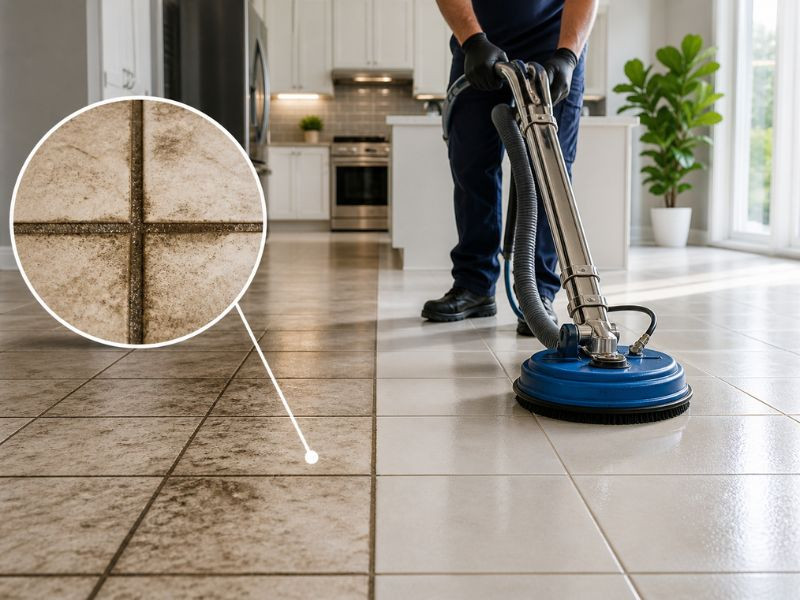
Grout is naturally porous, which means it absorbs spills, oils, and dirt quite easily. Even with regular cleaning, these particles remain trapped beneath the surface, leaving floors looking dull or uneven.
Professional tile and grout cleaning tackles this problem directly by using specialised equipment designed to lift and extract embedded dirt. Instead of just moving grime around, it breaks it down and removes it properly, restoring both the appearance and cleanliness of your floors.
Some key differences include:
- Deeper cleaning results: reaches into grout lines where regular mopping can’t.
- Improved appearance: restores the original colour of tiles and grout.
- Better hygiene: removes bacteria and allergens trapped below the surface.
- Longer-lasting clean: prevents buildup that quickly returns after standard mopping.
In the end, it’s the difference between a quick tidy-up and a proper deep clean that actually makes a noticeable and lasting impact.
Why regular mopping isn’t enough to clean tile and grout properly?
Regular mopping might keep your floors looking neat at a glance, but it doesn’t really deal with what’s happening beneath the surface. The problem is that most of the dirt, moisture, and bacteria settle into the grout lines, and a mop simply can’t reach that deep.
Because grout is porous, it absorbs everything from spills to cleaning residue. Instead of removing this buildup, mopping can actually push it further in. Over time, this leads to discolouration, lingering odours, and even bacteria growth.
Here’s where regular mopping falls short:
- Only cleans the surface: it doesn’t get into the grout where most grime sits.
- Can spread dirt around: instead of lifting it out completely.
- Leaves behind moisture: which can lead to mould or bacteria in grout lines.
- Builds up residue over time: making tiles look cloudy or worn.
To properly clean tile and grout, you need a deeper approach that can break down and remove what’s been trapped over time.
Why do my tiles still look dirty after regular mopping?
If your tiles still look dirty after mopping, the issue usually isn’t the tiles themselves — it’s what’s happening in the grout. Mopping does a decent job of picking up surface dirt, but it doesn’t remove the grime that’s built up deeper down.
Grout is quite absorbent, so it holds onto dirt, spills, and even leftover cleaning products. Over time, this buildup darkens the grout lines and makes the whole floor appear less clean, no matter how often you mop.
Common reasons include:
- Grout traps dirt easily: acting like a sponge that holds onto grime.
- Cleaning residue builds up: leaving tiles looking cloudy or streaky.
- Dirty water gets spread around: especially if the mop isn’t rinsed properly.
- Moisture settles into grout: leading to staining and discolouration over time.
A deeper clean is usually needed to properly remove what’s been absorbed into the grout and bring your tiles back to life.
What is the difference between tile and grout cleaning and regular mopping?
The main difference between tile and grout cleaning and regular mopping comes down to how thorough the clean is. Mopping is useful for daily maintenance, but it mostly deals with what’s on the surface.
Tile and grout cleaning is designed to break down and remove the buildup that’s been absorbed into the grout, rather than just shifting it around.
How they compare:
- How deep it cleans: mopping focuses on the surface, while tile and grout cleaning reaches into grout lines.
- Overall effectiveness: mopping can leave behind residue, while tile and grout cleaning removes buildup more thoroughly.
- Hygiene levels: mopping may spread bacteria, while tile and grout cleaning targets trapped contaminants.
- End result: mopping provides a short-term refresh, while tile and grout cleaning delivers a longer-lasting improvement.
In simple terms, mopping helps maintain appearances, while tile and grout cleaning restores the floor by dealing with what’s beneath the surface.
How often should you schedule tile and grout cleaning instead of regular mopping?
Regular mopping helps keep your floors looking presentable, but it doesn’t deal with the buildup that settles into the grout over time. Scheduling proper tile and grout cleaning every so often refreshes the floor and removes what everyday cleaning leaves behind.
As a general guide:
- Standard households: every 6 to 12 months.
- Busy homes: every 3 to 6 months.
- Workplaces and commercial areas: every 3 to 6 months, or sooner in high-traffic environments.
- Problem areas: kitchens and entrances may need more frequent cleaning.
In between deeper cleans, mopping still plays a role in everyday upkeep. It works best when combined with occasional professional cleaning.
Does tile and grout cleaning remove bacteria that regular mopping misses?
Yes, tile and grout cleaning does remove bacteria that regular mopping often misses. While mopping is useful for keeping floors looking clean, it doesn’t get into the grout lines where moisture, dirt, and germs tend to build up over time.
Because grout is porous, it easily traps contaminants beneath the surface. Even if your tiles look spotless, bacteria can still be hiding in the grout.
Why it makes a difference:
- Reaches below the surface: targets bacteria hidden in grout lines.
- Removes moisture and buildup: common sources of bacteria.
- Delivers a more thorough clean: instead of just refreshing the surface.
- Creates a healthier space: especially important for homes and workplaces.
Mopping helps maintain your floors, but a proper deep clean is what removes hidden bacteria and leaves the space feeling genuinely fresh.
Conclusion
Perth Local Carpet Cleaning takes pride in delivering this content to you. In this blog post, you’ve read everything you need to know about “Tile and Grout Cleaning: Why Regular Mopping Isn’t Enough”.
Content developed by Perth Local Carpet Cleaning.
If you’re tired of results that fall short because regular mopping isn't enough, it’s time to invest in professional tile and grout cleaning. Perth Local Carpet Cleaning offers industry-leading solutions using advanced truck-mounted equipment to deliver exceptional results.
Contact our team today and experience the difference that expert tile and grout cleaning can make — book your service now and transform your floors!