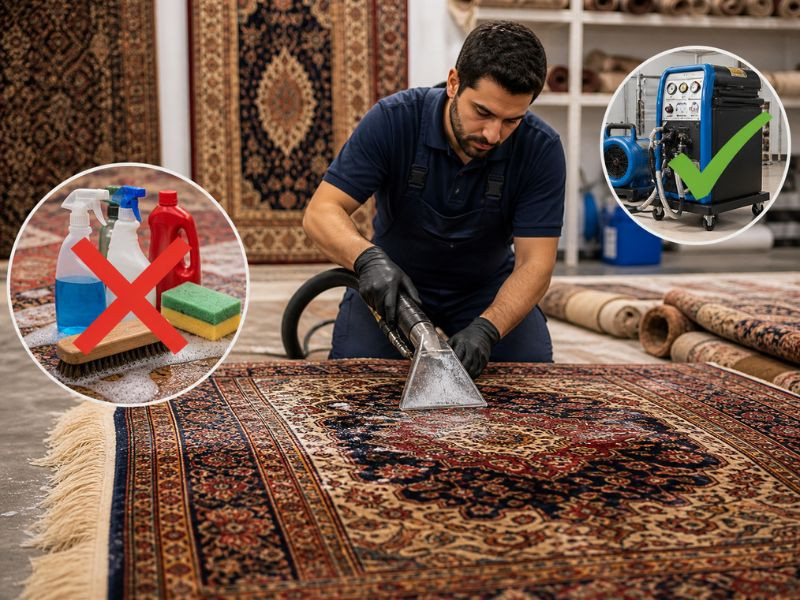
When it comes to Persian rug cleaning, many homeowners are tempted to try a do-it-yourself approach to save money or time. However, Persian rug cleaning is a highly specialised process that requires expertise, precision, and the right equipment.
Attempting to handle Persian rug cleaning yourself can lead to irreversible damage, especially when experts strongly advise to never DIY. Understanding why you should never DIY Persian rug cleaning is essential if you want to preserve the beauty, value, and longevity of your rug.
At Perth Local Carpet Cleaning, we frequently see the consequences of improper Persian rug cleaning where customers unfortunately learned the hard way. This blog post explains why Persian rug cleaning should always be left to professionals and why you should absolutely never DIY when it comes to these delicate and valuable pieces.
Topics Covered
- Why should you never DIY Persian rug cleaning at home?
- What are the risks of DIY Persian rug cleaning methods?
- Can DIY Persian rug cleaning damage delicate fibres and dyes?
- Why do experts say never DIY Persian rug cleaning for antique rugs?
- How can DIY Persian rug cleaning cause colour bleeding or shrinkage?
- Is professional Persian rug cleaning better than DIY cleaning?
- Conclusion
Why Should You Never DIY Persian Rug Cleaning at Home?
Trying to handle Persian rug cleaning at home might seem like a practical way to save time or money, but it often leads to more harm than good. Persian rugs are not like standard carpets—they’re carefully handcrafted, often using natural fibres and traditional dyes that require a much more controlled approach.
One of the biggest issues with DIY Persian rug cleaning is moisture control. Without the right equipment, it’s easy to use too much water, which can seep deep into the rug’s foundation. This can weaken the structure, create lingering odours, and even lead to mould if it doesn’t dry properly.
- Over-wetting the rug, which can damage the internal structure
- Using unsuitable cleaning products that affect fibres and dyes
- Incomplete drying, leading to odours or mould growth
- Rough handling that distorts or weakens delicate areas
What Are the Risks of DIY Persian Rug Cleaning Methods?
At first glance, tackling Persian rug cleaning yourself might feel like a simple weekend job. In reality, it’s easy to cause damage without even realising it.
Persian rugs are made with natural fibres and traditional dyes that react very differently to water, heat, and cleaning products. That’s why professionals consistently warn to never DIY Persian rug cleaning—the margin for error is much smaller than most people expect.
- Colour bleeding or fading, especially when dyes aren’t colourfast
- Fibre weakening, caused by harsh chemicals or excessive agitation
- Mould and odours, due to poor drying after cleaning
- Shrinkage or warping, from over-saturation
- Reduced value, particularly for handmade or older rugs
Can DIY Persian Rug Cleaning Damage Delicate Fibres and Dyes?
Yes, and it’s more common than most people realise. Persian rug cleaning isn’t just about removing dirt—it’s about preserving materials that are naturally delicate.
These rugs are often made from wool or silk and dyed using traditional techniques, which makes them far more sensitive to water, chemicals, and handling.
- Colour bleeding, where patterns lose their definition as dyes spread
- Fading, caused by unsuitable cleaning solutions
- Weakened fibres, particularly when exposed to strong chemicals
- Rough or dry texture, from stripping natural oils
- Patchy results, due to uneven cleaning techniques
Why Do Experts Say Never DIY Persian Rug Cleaning for Antique Rugs?
Antique rugs require a level of care that goes far beyond standard Persian rug cleaning. These pieces are often fragile due to their age, with fibres that have naturally weakened over time and dyes that may no longer be stable.
Because of this, professionals consistently recommend to never DIY Persian rug cleaning when dealing with antique rugs—what seems like a small mistake can quickly turn into permanent damage.
- Weakened fibres, which are more vulnerable to moisture and chemicals
- Colour bleeding or fading, particularly with older, natural dyes
- Damage to the rug’s structure, including loose knots or misshaping
- Loss of value, especially for rare or collectible pieces
- Permanent changes, where restoration may not fully recover the rug
How Can DIY Persian Rug Cleaning Cause Colour Bleeding or Shrinkage?
Colour bleeding and shrinkage are two of the most common issues that come from attempting Persian rug cleaning at home. These rugs are made with natural fibres and traditional dyes, which don’t respond well to excess moisture or the wrong cleaning products.
Colour bleeding usually happens when dyes are exposed to too much water or unsuitable detergents. Shrinkage tends to occur for similar reasons, especially when natural fibres like wool absorb too much water or are not dried evenly.
- Too much water, which affects both dyes and fibre structure
- Inappropriate cleaning products, leading to colour instability
- Uneven drying conditions, causing distortion or shrinkage
- Residue left behind, which can continue to affect fibres after cleaning
- Improper handling, increasing stress on already wet materials
Is Professional Persian Rug Cleaning Better Than DIY Cleaning?
In most situations, professional Persian rug cleaning is the safer and more reliable option. While it might be tempting to handle it yourself, these rugs require a level of care that’s hard to achieve without the right experience and equipment.
Professionals assess the materials, dyes, and condition before starting, which allows them to choose the most suitable method. DIY Persian rug cleaning, on the other hand, often relies on guesswork.
- Careful handling of delicate fibres and dyes, reducing the chance of damage
- Better moisture control, helping prevent shrinkage or warping
- More effective stain removal, without relying on harsh chemicals
- Consistent results, with a more even and thorough clean
- Proper drying, which helps maintain the rug’s shape and condition
Conclusion
Perth Local Carpet Cleaning takes pride in delivering this content to you. In this blog post, you’ve read everything you need to know about “Persian Rug Cleaning: Why You Should Never DIY”.
We covered why you should never DIY Persian rug cleaning at home, the risks of DIY Persian rug cleaning methods, how DIY cleaning can damage delicate fibres and dyes, why antique rugs require professional care, how colour bleeding and shrinkage happen, and why professional Persian rug cleaning is usually the better option.
Content developed by Perth Local Carpet Cleaning.
If you’re considering Persian rug cleaning, don’t take unnecessary risks—remember to never DIY. Trust Perth Local Carpet Cleaning to deliver safe, effective, and professional Persian rug cleaning services that protect your investment and restore your rug’s beauty.
Contact our team today and experience the difference of expert care—book your Persian rug cleaning service now!