Ceiling Leak Water Damage: How to Protect Your Carpets and Furniture
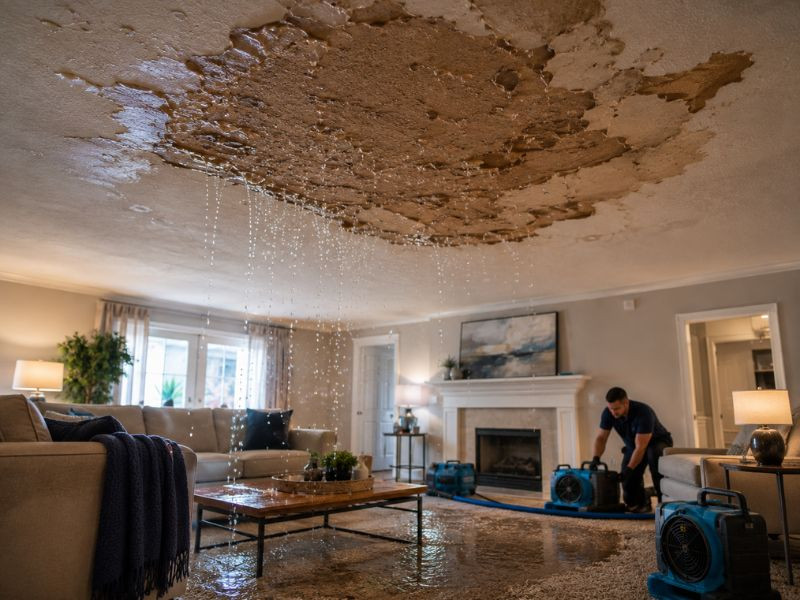
A ceiling leak can happen without warning. One minute everything is fine; the next, water is dripping through your ceiling, pooling on your carpet, and soaking into the base of your sofa. Whether it's caused by a burst pipe, a roof failure during a Perth storm, or an overflowing bathroom above, ceiling leak water damage is one of the most disruptive things a homeowner or property manager can face. The real problem, though, is not always the visible water. It's what happens in the hours and days that follow if nothing is done about it.
Water damaged carpet and furniture are not just an aesthetic issue. Left untreated, a ceiling leak creates conditions for mould growth, structural deterioration, and long-term health risks. The good news is that acting quickly, and calling the right professionals, can make the difference between a full recovery and a costly write-off.
See below the topics that will be covered in this blog post about "Ceiling Leak Water Damage: How to Protect Your Carpets and Furniture":
- What should I do immediately after a ceiling leak to protect my carpets and furniture?
- How long does it take for a ceiling leak to cause permanent carpet damage?
- Can water-damaged carpet be saved, or does it always need to be replaced?
- What are the risks of leaving wet carpet untreated after a ceiling leak?
- How is professional wet carpet drying different from using fans and towels at home?
- Can professional cleaning restore water-damaged furniture, or is it a write-off?
- How quickly should I call a professional after a ceiling leak in my Perth home?
- Does home insurance cover professional carpet and furniture cleaning after a ceiling leak?
- How do I know if my carpet has mould after a ceiling leak?
- What does emergency water damage cleaning involve, and what should I expect?
- Conclusion
Ceiling leak water damage is one of those situations where the right information makes a genuine difference to the outcome. Whether you're dealing with a minor drip that went unnoticed for a few days or a full pipe burst that has soaked through multiple rooms, this guide gives you a clear picture of what you're dealing with, what can be saved, and how professional carpet and furniture cleaning in Perth can restore your home without unnecessary expense. Keep reading.
What Should I Do Immediately After a Ceiling Leak to Protect My Carpets and Furniture?
The first thirty minutes after a ceiling leak are the most important. The decisions you make in that window directly affect whether your carpets and furniture can be restored or whether they become a write-off. Ceiling leak water damage spreads fast. Water follows the path of least resistance, which means it travels through ceiling plaster, soaks into carpet backing and underlay, wicks up furniture legs, and settles into cushions and foam before the surface even looks visibly wet.
The immediate priority is to stop the source if you can safely do so. If the leak is from a burst or leaking pipe, locate your mains water shutoff and turn it off. If it's caused by a roof failure or storm water ingress, you won't be able to stop it, but you can limit the spread. Move as much furniture as possible out of the affected area, and place waterproof sheeting or plastic bags under the legs of any pieces you can't shift.
Once the source is under control, focus on the carpet. Do not walk on a heavily saturated carpet more than necessary, as foot traffic pushes water deeper into the backing and underlay, making it harder to extract later. Use towels or absorbent cloths to lift surface moisture, but don't waste time expecting household methods to do the work of proper water extraction equipment.
Here's a practical checklist for the first hour:
- Turn off the water supply or isolate the source of the leak
- Switch off electrical circuits in the affected area if water is near power points or fittings
- Move furniture away from wet carpet or elevate legs using foil, plastic bags, or coasters to prevent dye transfer and rust staining
- Remove rugs, mats, and any loose floor coverings from the wet area
- Blot surface moisture from carpet with dry towels: press, don't rub
- Open windows and internal doors to begin air circulation
- Document the damage with photos for your insurance claim
- Call a professional water damage cleaning and restoration service immediately
The sooner you act on ceiling leak water damage, the better your chances of saving both your carpet and your furniture. Perth homeowners in suburbs like Subiaco, South Perth, and Applecross often underestimate how quickly water can travel from a ceiling cavity into the structure of their flooring. Even a modest leak running for a few hours can saturate underlay completely while the carpet surface still feels only slightly damp.
Professional carpet cleaning in Perth teams with water damage capability can assess the extent of moisture penetration using thermal imaging and moisture meters, tools that give a far more accurate picture than anything you can gauge by touch or sight alone.
How Long Does It Take for a Ceiling Leak to Cause Permanent Carpet Damage?
This is one of the most common questions Perth homeowners ask after discovering ceiling leak water damage, and the answer is less forgiving than most people expect. The timeline for permanent damage depends on several factors: the volume of water, the carpet fibre type, the condition of the underlay, ventilation in the room, and the ambient temperature. In Perth's warm climate, these conditions often accelerate the damage significantly.
In general terms:
- Within 1 to 2 hours: Water begins saturating the carpet backing and underlay. Surface fibres may still look recoverable, but moisture is already migrating downward. Furniture legs and bases begin absorbing water.
- Within 24 hours: Mould spores, which are always present in the air, begin to activate in damp organic material. Carpet backing, which is typically made from jute or synthetic compounds, starts to break down. Underlay, particularly foam-based underlay, becomes fully saturated and acts as a reservoir holding moisture against the subfloor.
- Within 48 hours: Mould growth becomes visible or detectable by smell. Carpet fibres may begin to separate from the backing. Wood subfloors and skirting boards start to show signs of swelling. Water damaged carpet at this stage is significantly harder to restore and, in some cases, requires replacement.
- Beyond 72 hours: Structural damage to the subfloor is increasingly likely. Mould colonies are established. Carpet delamination, where the fibres detach from the backing entirely, becomes a real risk. Furniture upholstery that has been exposed to sustained moisture will require specialist water damaged furniture cleaning in Perth to have any chance of recovery.
The speed of deterioration is why ceiling leak water damage is treated as an emergency situation by professional restorers. Waiting until the next business day or worse, the next available appointment in your schedule, routinely turns a restorable situation into a replacement one. Perth Local Carpet Cleaning offers 24/7 emergency water damage cleaning in Perth precisely because the 24-hour window matters.
It is also worth noting that damage is not always uniform. A ceiling leak directly above a rug on a hard floor is a very different situation from one above wall-to-wall carpet in a bedroom. The presence of underlay dramatically increases the volume of water retained and the time required for proper wet carpet drying in Perth conditions.
Can Water-Damaged Carpet Be Saved, or Does It Always Need to Be Replaced?
The short answer is that many water damaged carpets can be saved, but the outcome depends on how quickly you act and the type of water involved. Not all ceiling leaks are the same. Professionals categorise water damage into three types, and the category determines whether restoration is viable or whether replacement is the safer option.
- Category 1 - Clean water: This includes burst water supply pipes, leaking appliances, and rainwater ingress through the roof. Clean water ceiling leak water damage is the most treatable. With prompt extraction, proper wet carpet drying in Perth conditions, and professional cleaning and sanitising, the majority of carpets affected by clean water can be fully restored.
- Category 2 - Grey water: This includes water from dishwashers, washing machines, or overflowing toilet cisterns (not the bowl itself). Grey water contains mild contaminants and requires thorough sanitising in addition to drying. Restoration is often still possible, but the process is more involved and professional treatment is essential.
- Category 3 - Black water: This includes sewage, floodwater from external sources, or water that has been sitting long enough to become heavily contaminated. Water damaged carpet exposed to black water is generally considered non-restorable due to health and hygiene risks. Replacement is the recommended course of action.
For Category 1 ceiling leak water damage: which covers the vast majority of domestic incidents in Perth, the key variables are time and thoroughness. A carpet that is extracted within a few hours, dried properly with industrial equipment, and then professionally cleaned and sanitised has an excellent chance of full recovery. The same carpet left wet for 48 hours starts to present a very different picture.
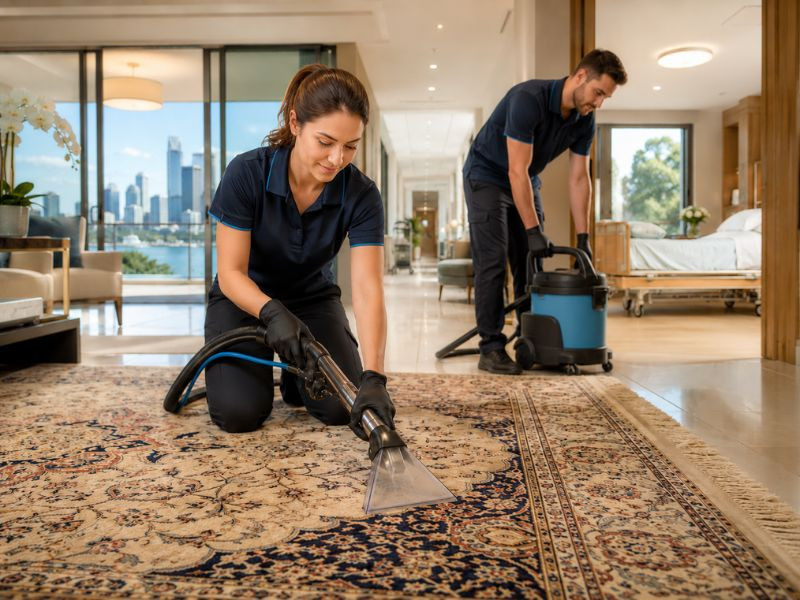
Steam carpet cleaning in Perth using truck-mounted equipment plays an important role in this process. Truck-mounted systems generate far higher temperatures and extraction power than portable machines, which means they can remove deeply embedded moisture and contaminants more effectively, giving the carpet the best possible chance of restoration. Perth Local Carpet Cleaning uses exactly this technology across residential jobs throughout Cottesloe, Mount Lawley, Hillarys, Victoria Park, Scarborough, and surrounding suburbs.
The underlay is a separate consideration. In most cases, underlay absorbs and retains so much water that it cannot be effectively dried in place. Professional restorers typically recommend removing and replacing the underlay, even when the carpet itself is salvageable. This is not a reason to panic: underlay replacement is a relatively low cost compared to full carpet replacement, and it removes the primary risk factor for mould under your restored carpet.
What Are the Risks of Leaving Wet Carpet Untreated After a Ceiling Leak?
Leaving wet carpet untreated after ceiling leak water damage is one of the costliest mistakes a Perth homeowner can make, and the risks extend well beyond a musty smell or a stained surface. The consequences compound quickly, and they affect not just the carpet itself but the health of the people living or working in the space.
The most immediate risk is mould. Mould spores are present in virtually every indoor environment and remain dormant until they encounter moisture. Wet carpet and saturated underlay create ideal conditions for mould growth. Within 24 to 48 hours of a ceiling leak, mould colonies can begin establishing themselves deep in the carpet pile and backing, in the underlay, and on the timber subfloor beneath. Once mould takes hold, remediation becomes significantly more complex and expensive than the original water damage treatment would have been. Asthma Australia notes that indoor mould is a known trigger for respiratory conditions, making prompt treatment especially important in homes with children, elderly residents, or anyone with asthma or allergies.
Beyond mould, untreated ceiling leak water damage creates the following risks:
- Subfloor deterioration: Timber and particleboard subfloors absorb moisture over time, leading to swelling, cupping, and eventual structural failure. Once a subfloor is compromised, repairs go well beyond carpet replacement.
- Skirting board and wall damage: Water wicks upward from saturated carpet into skirting boards and lower wall cavities. This often goes unnoticed until paint begins blistering or skirting boards start to separate from the wall.
- Odour: Wet organic material, particularly jute-backed carpet, begins to smell within days. The odour is caused by bacterial growth and is difficult to eliminate without professional steam carpet cleaning in Perth at sufficient temperature to kill bacteria.
- Pest attraction: Sustained moisture creates an environment that attracts dust mites and, in some cases, insects. This is particularly relevant in Perth suburbs with established gardens close to the house, such as Applecross, Cottesloe, and Fremantle.
- Health implications: Beyond respiratory issues related to mould, prolonged exposure to damp indoor environments has been linked to broader health effects, particularly for vulnerable household members.
The financial case for acting quickly is straightforward. Emergency water damage cleaning in Perth costs significantly less than mould remediation, subfloor replacement, and full re-carpeting. Every hour of delay shifts the balance between a manageable clean-up and a major renovation.
How Is Professional Wet Carpet Drying Different from Using Fans and Towels at Home?
Most people's first instinct after ceiling leak water damage is to grab every towel in the house, mop up what they can see, and point a few fans at the wet area. It's a natural response, and it does help at the margins. But domestic drying methods and professional wet carpet drying in Perth are in fundamentally different leagues, and understanding the difference explains why professional intervention is so important.
Household fans move air across the surface of the carpet. They can help dry the top layer of fibres, but they do very little for the carpet backing, the underlay, or the subfloor beneath. In fact, in some cases, running fans without first extracting the bulk of the moisture simply pushes evaporated water into the surrounding walls and air, increasing ambient humidity in the room and accelerating conditions for mould growth.
Professional wet carpet drying in Perth involves a structured, staged process:
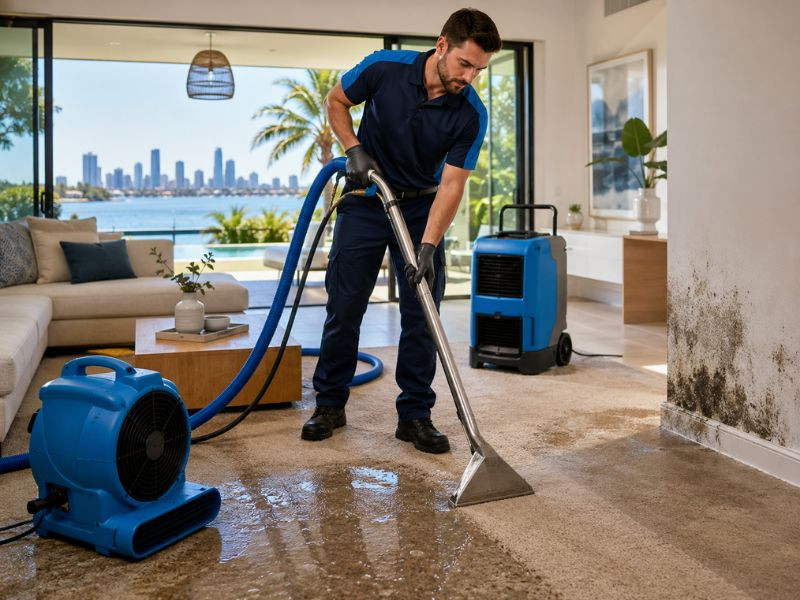
- Water extraction first: Before any drying begins, powerful truck-mounted or industrial extraction equipment removes the bulk of the water from the carpet pile, backing, and as much of the underlay as possible. This extraction step alone removes far more moisture than towels and mops, and it's the foundation of every successful restoration.
- Moisture mapping: Professionals use thermal imaging cameras and calibrated moisture meters to identify exactly where water has travelled. Ceiling leak water damage rarely stays in one spot. It follows ceiling joists, travels along wall cavities, and pools in low points you might not think to check. Without moisture mapping, drying efforts can miss saturated zones that later become mould problems.
- Industrial drying equipment: High-capacity air movers are positioned to create airflow not just across the surface but through the carpet structure. These are not domestic fans. They move significantly higher volumes of air at controlled velocities that promote evaporation from within the pile and backing, not just across the top.
- Dehumidification: Industrial dehumidifiers run continuously alongside air movers to capture the moisture being driven out of the carpet and release it from the room. This prevents the humidity from simply re-depositing in surrounding materials.
- Progress monitoring: Moisture readings are taken at regular intervals throughout the drying process to confirm that targets are being met across the entire affected area, not just in the most visible spots.
The combined effect of this process is a thorough, verified dry that takes hours rather than days, and eliminates the risk zones that home drying methods routinely miss. Perth Local Carpet Cleaning provides professional wet carpet drying in Perth across the metro area, including Joondalup, Wangara, Osborne Park, Malaga, Welshpool, and Bibra Lake.
Can Professional Cleaning Restore Water-Damaged Furniture, or Is It a Write-Off?
Furniture caught in the path of ceiling leak water damage occupies a wide spectrum of outcomes. Some pieces can be fully restored with professional treatment. Others are genuinely beyond saving. The distinction depends on the material, the construction, the duration of exposure, and the type of water involved.
Solid timber furniture, particularly pieces with quality joinery, can often survive ceiling leak water damage if treated promptly. The risk with timber is swelling, warping, and paint or veneer separation, all of which develop over time as moisture penetrates the grain. Quick action to remove the piece from the wet environment, allow it to dry gradually in a ventilated space, and then assess for professional treatment gives it the best possible chance.
Upholstered furniture is more complex. A sofa, armchair, or dining chair with fabric or leather covering holds moisture in layers, the outer fabric, the foam or spring interior, and any timber or MDF framing. Water damaged furniture cleaning in Perth involves assessing each layer independently.
Upholstery cleaning in Perth for water-affected pieces typically includes:
- Surface extraction: Removing as much moisture as possible from the outer fabric using professional extraction equipment
- Antimicrobial treatment: Applying solutions that inhibit mould and bacterial growth within the foam and fabric layers
- Controlled drying: Using air movers and dehumidifiers to draw moisture out of the upholstery structure without causing further damage
- Deodorising: Treating the piece to neutralise odours caused by bacterial activity in damp foam
Leather furniture requires particular care after ceiling leak water damage. Prolonged moisture exposure causes leather to stiffen, crack, and develop mould on the surface and in the seams. Leather cleaning in Perth by qualified professionals, followed by the application of appropriate conditioners, can reverse early-stage moisture damage in many cases. Furniture that has been wet for more than 48 hours presents a higher risk of permanent damage regardless of material.
The honest answer on write-offs: MDF-framed furniture that has absorbed significant water is rarely worth restoring. MDF swells irreversibly when saturated, and once the structural integrity of the frame is compromised, professional cleaning cannot address it. Flat-pack furniture and budget sofas fall into this category more often than solid-construction pieces.
Perth Local Carpet Cleaning provides water damaged furniture cleaning in Perth as part of its comprehensive water damage restoration service. The team assesses each piece individually and advises honestly on restoration versus replacement, so you're not spending money on treatment that won't deliver results.
How Quickly Should I Call a Professional After a Ceiling Leak in My Perth Home?
Immediately. That is the direct answer, and it is not an overstatement. Ceiling leak water damage does not improve with time, and every hour that passes without professional intervention narrows the range of outcomes available to you.
Many Perth homeowners hesitate to call a professional in the first few hours after a ceiling leak for understandable reasons. It might seem like the leak has stopped, the carpet doesn't feel that wet, or they want to wait and see how things look in the morning. These are reasonable human instincts that routinely lead to preventable damage. The issue is that the most significant deterioration during ceiling leak water damage happens invisibly. The carpet surface might look manageable while the underlay underneath is fully saturated and mould conditions are already developing.
The rule used by water damage professionals is simple: if water has contacted your carpet or furniture, call within the first two hours. Perth Local Carpet Cleaning operates 24 hours a day, seven days a week, for exactly this reason. Emergency water damage cleaning in Perth is not a luxury service reserved for floods and disaster scenarios. It's the appropriate response to any ceiling leak that has affected flooring or furnishings.
There are specific situations where calling immediately is even more critical:
- The ceiling leak was caused by a sewage or drain failure (black water contamination)
- Water has reached electrical fittings, skirting boards, or power points
- The affected area covers more than a few square metres
- The property is a rental, Airbnb, or commercial space where downtime and liability are concerns
- Anyone in the household has asthma, allergies, or compromised immunity
Perth Local Carpet Cleaning services water damage emergencies across the full Perth metropolitan area, including Fremantle, Subiaco, Victoria Park, South Perth, Scarborough, Hillarys, and Mount Lawley, as well as commercial areas including Perth CBD, Joondalup, Osborne Park, Welshpool, Malaga, Wangara, and Bibra Lake.
Does Home Insurance Cover Professional Carpet and Furniture Cleaning After a Ceiling Leak?
In most cases, yes; but the details matter, and it's worth understanding how home insurance responds to ceiling leak water damage before you find yourself in the middle of a claim.
Standard Australian home and contents insurance policies typically cover sudden and accidental water damage. A burst pipe, a roof failure during a severe storm, or a plumbing fault causing ceiling leak water damage would generally fall within the scope of most policies. The professional carpet cleaning, wet carpet drying, furniture restoration, and any necessary structural repairs are typically claimable as part of the overall loss.
However, there are important caveats:
- Gradual damage is often excluded: If the leak has been occurring slowly over time, a slow drip from a failing pipe fitting, for example, insurers may argue that the damage was not sudden and accidental. This is why documenting the incident promptly and accurately matters.
- Maintenance issues may not be covered: If the ceiling leak resulted from a lack of roof maintenance or a known plumbing problem that wasn't addressed, coverage may be denied or disputed.
- The excess applies: For minor ceiling leak water damage events, the total loss may be only slightly above your policy excess. It's worth calculating whether claiming is worthwhile in smaller incidents.
- Contents versus building cover: Water damaged carpet is typically covered under building insurance, while furniture falls under contents. Check whether you have both types of coverage under your policy.
What insurance companies do consistently expect is that you act promptly to limit the damage. Failing to call for emergency water damage cleaning in Perth, or leaving wet carpet untreated for several days before reporting the incident, can give an insurer grounds to reduce your claim on the basis that the damage was allowed to worsen.
The practical advice: photograph everything immediately, report the ceiling leak to your insurer as soon as it's safe to do so, and call Perth Local Carpet Cleaning to begin the restoration process. Your insurer will generally look more favourably on a claim where prompt, professional action was taken to limit the loss.
How Do I Know If My Carpet Has Mould After a Ceiling Leak?
Mould is one of the most serious consequences of untreated ceiling leak water damage, and one of the trickier ones to identify because it often develops in places that aren't visible. By the time mould is easy to see on the surface of a carpet, it has typically already been growing in the backing and underlay for some time.
There are several reliable indicators that mould may be present in your carpet following ceiling leak water damage:
- Smell: A persistent musty or earthy odour that doesn't improve with ventilation is the most common early sign of mould in carpet. The smell comes from microbial volatile organic compounds (MVOCs) produced during mould growth, and it's often detectable before any visible signs appear.
- Visible discolouration: Dark spots, greenish patches, or white powdery growth visible on carpet fibres, particularly in corners or along skirting boards, are direct signs of active mould. These may appear days or weeks after the initial ceiling leak.
- Allergy and respiratory symptoms: If household members who have no pre-existing conditions begin experiencing sneezing, eye irritation, nasal congestion, or breathing difficulties that improve when they leave the house, mould contamination is a strong suspect. Asthma Australia identifies carpet mould as a significant indoor allergen trigger.
- Increased humidity: A room that consistently feels more humid than the rest of the house after ceiling leak water damage may indicate that moisture is still present in the carpet and underlay, providing conditions for ongoing mould activity.
- Staining patterns: Water damaged carpet that shows irregular staining, tide marks, or discolouration along the direction of water flow is worth investigating beneath the surface. Lifting a corner of the carpet to inspect the backing and underlay can reveal mould growth that is entirely invisible from above.
If you suspect mould in your carpet, do not attempt to remove it with household sprays or scrubbing. This disturbs the mould colony and can release spores into the air, worsening the problem. Professional carpet cleaning in Perth using appropriate antimicrobial treatments and high-temperature steam extraction is the correct approach. Perth Local Carpet Cleaning assesses mould-affected carpet and provides honest advice on whether treatment or replacement is the appropriate course of action.
What Does Emergency Water Damage Cleaning Involve, and What Should I Expect?
When you call Perth Local Carpet Cleaning for emergency water damage cleaning in Perth, here is exactly what you can expect from the process.
- Initial response and assessment. A technician arrives and conducts a thorough assessment of the ceiling leak water damage using moisture meters and thermal imaging equipment. This identifies all affected areas, including those where water has spread beyond the visible wet zone. You'll receive a clear picture of the extent of the damage before any work begins.
- Water extraction: The first active step is high-powered extraction of standing water and deeply absorbed moisture from your carpet, underlay, and any affected upholstery. Truck-mounted extraction equipment removes the bulk of the water in a fraction of the time that domestic equipment or towels can manage.
- Furniture handling: Remaining furniture in the affected area is either moved or protected with appropriate barriers to prevent further damage and allow full access to the flooring.
- Drying equipment installation: Industrial air movers and dehumidifiers are positioned throughout the affected area according to a drying plan developed from the moisture mapping assessment. These run continuously and are typically left in place for 24 to 72 hours, depending on the severity of the ceiling leak water damage and the construction of the flooring.
- Antimicrobial treatment: The affected carpet, backing, and any exposed subfloor areas are treated with professional antimicrobial solutions to inhibit mould growth during the drying process.
- Progress checks: Perth Local Carpet Cleaning returns to monitor drying progress and take moisture readings at regular intervals. Equipment is adjusted or repositioned as required to ensure all areas reach safe moisture levels.
- Final cleaning and sanitising. Once the carpet and subfloor have reached target moisture levels, a final steam carpet cleaning in Perth service is carried out to clean, sanitise, and deodorise the fibres. This removes any residual contamination and restores the carpet to a hygienic condition.
- Documentation. Moisture readings, drying logs, and before-and-after documentation are provided, which are particularly useful for insurance claims.
The entire process from first call to completion is managed by Perth Local Carpet Cleaning's experienced team, who handle water damage jobs across the full Perth metro area, from residential properties in Subiaco, Cottesloe, South Perth, and Applecross, through to commercial premises in Perth CBD, Osborne Park, Welshpool, Joondalup, and Wangara.
Conclusion
Perth Local Carpet Cleaning takes pride in delivering this content to you! In this blog post, you've read everything you need to know about "Ceiling Leak Water Damage: How to Protect Your Carpets and Furniture". We covered what to do immediately after a ceiling leak to protect your carpets and furniture, how long it takes for a ceiling leak to cause permanent carpet damage, whether water-damaged carpet can be saved or needs to be replaced, the risks of leaving wet carpet untreated after a ceiling leak, how professional wet carpet drying differs from using fans and towels at home, whether professional cleaning can restore water-damaged furniture, how quickly you should call a professional after a ceiling leak in your Perth home, whether home insurance covers professional carpet and furniture cleaning after a ceiling leak, how to identify mould in your carpet after a ceiling leak, and what emergency water damage cleaning involves and what to expect. Keep following the Perth Local Carpet Cleaning blog for more tips and updates.
Content developed by Perth Local Carpet Cleaning.
Ceiling leak water damage can go from manageable to serious in a matter of hours, but the right professional response makes all the difference. Perth Local Carpet Cleaning provides emergency water damage cleaning and restoration in Perth, including professional wet carpet drying, water damaged furniture cleaning, mould treatment, and full carpet and upholstery cleaning in Perth for both residential and commercial properties across the metro area. If you've experienced a ceiling leak, don't wait. Visit our contact page to get your property assessed and restoration underway.